

This week’s industry signal: define the process and its data
On September 29, 2026, the German Machine Tool Builders’ Association (VDW) published an announcement about the KI4WZM research project. It identified potential uses of AI in knowledge management, fault diagnosis and process optimization, and emphasized concrete needs, suitable data and traceability. The announcement describes research directions and project ideas. For a shop buying a CNC lathe for repeat parts, GEDEMA’s editorial takeaway is practical: document the part and production problem before comparing equipment. The following checklist applies that principle to shafts, bushings and fittings; it does not describe an AI feature on a GEDEMA machine.
1. Compare a part family, not one convenient sample
A repeat-part machine may need to cover several drawing revisions and sizes. Select representative drawings for the smallest and largest stock, the longest unsupported section and the part with the most secondary features. For fittings, mark the sealing face, thread, bore and wrench feature. For shafts, mark shoulders, grooves, journals and any cross holes or flats. Group parts by stock form and operation sequence rather than by their commercial name alone. Two components both called a coupling can require different workholding and tooling. Keep drawing revision, material condition and inspection requirements attached to each example so that quotations refer to the same production task.

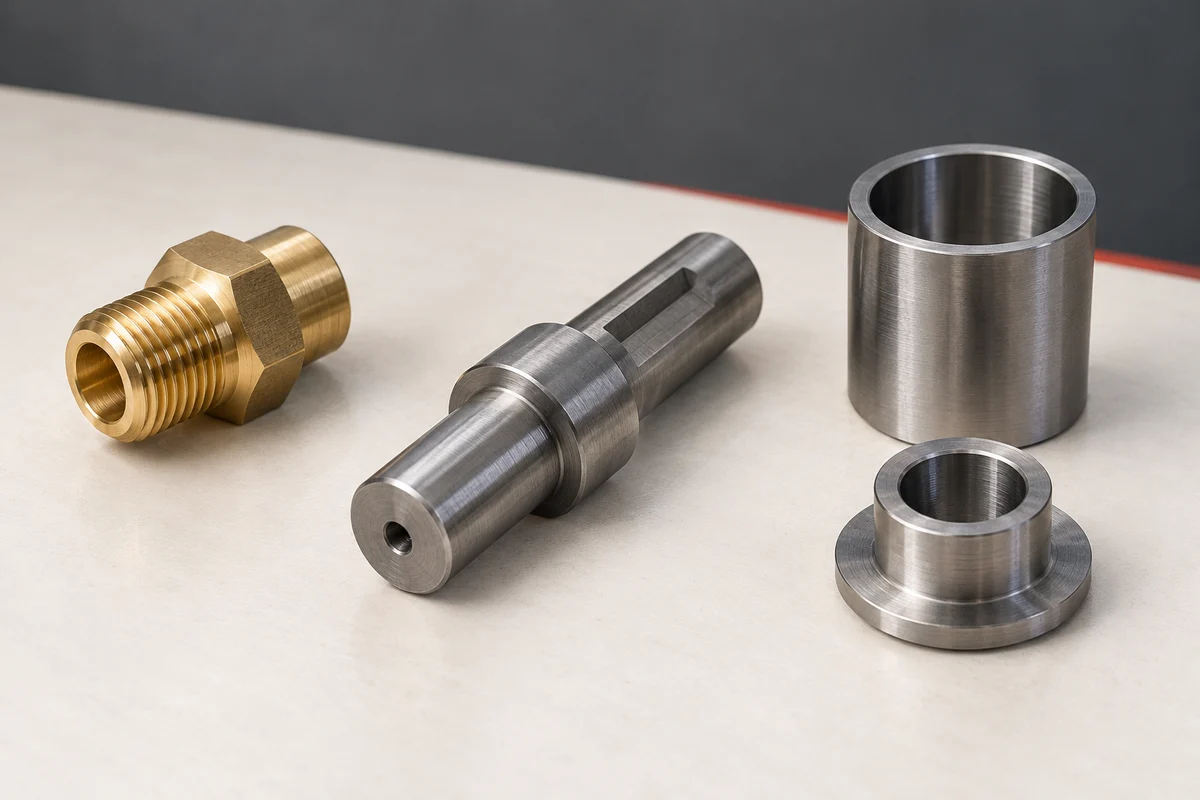
2. Decide which features actually need turning and milling
Start by separating rotational features from features that need another tool direction. Diameters, faces, grooves and coaxial bores form the turning discussion. Cross holes, bolt-hole patterns and milled flats introduce questions about driven tools, indexing and access. A predominantly turned bushing should first be assessed as a turning job. A coupling with a hole pattern may justify comparing a turn-mill route with turning followed by a separate operation. Ask where each datum is established and how its relationship to later features is maintained. Combining operations can remove a transfer, but a shorter route alone does not establish an acceptable process. Tool reach, clamping clearance and inspection still need review.
3. Put stock, workholding and support in the RFQ
Finished dimensions are only part of CNC lathe selection. State whether the work starts from bar, a saw-cut blank, a forging or a partially machined component. Include the stock envelope, gripping length, cut-off allowance and which surfaces may be clamped. For a longer shaft, identify unsupported sections and any restrictions on support contact. For a thin sleeve or fitting, ask how clamping and tool access will be assessed. A published machine range is an initial screening reference; it is not a substitute for checking the real blank and fixture. If bar feeding, part collection or another peripheral is needed, describe it explicitly and request confirmation of the proposed configuration.
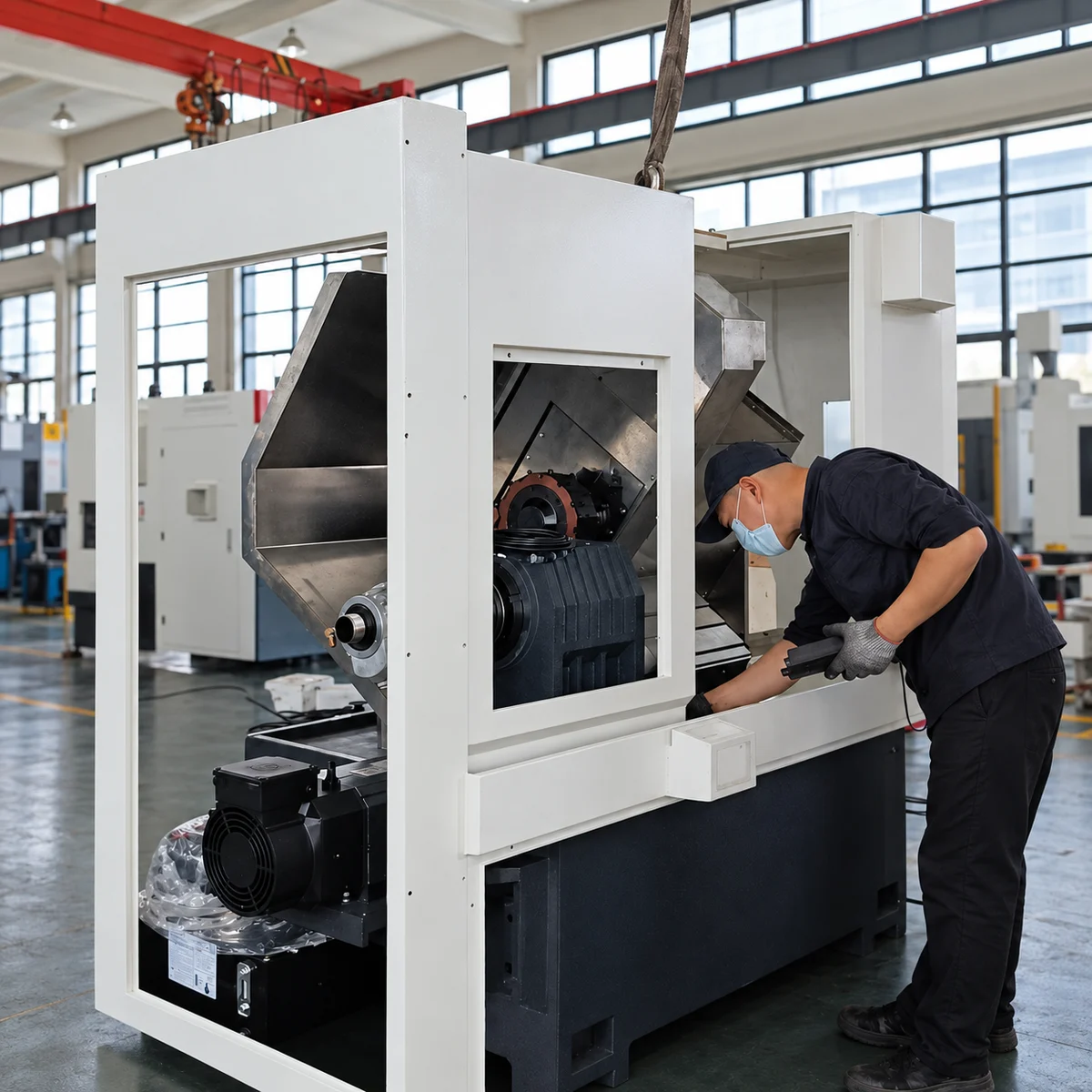
4. Compare repeat production and changeovers separately
Share the batch quantity, order frequency and expected mix of part numbers. Distinguish a stable family of bar parts from frequent changes between unrelated shafts and fittings. Ask the supplier to explain the proposed tool arrangement, workholding changes, programming requirements and operator tasks for each representative drawing. Request the conditions behind any proposed cycle estimate, including material, tooling, loading method and inspection frequency. Separate cutting time from loading, changeover, inspection and secondary handling. This makes the quotation useful for your actual production mix, while leaving numerical performance claims to a documented trial or agreed acceptance procedure.
5. Agree on inspection before comparing machine proposals
Mark the critical dimensions and relationships on the controlled drawing. A shaft journal, a sealing bore and a threaded connector do not share the same inspection question. State the datum system, measuring method, required records and whether a feature is checked in process or after unloading. If a quotation includes a sample-machining exercise, agree on the material, drawing revision and evaluation method beforehand. Keep acceptance criteria specific to the part. A photograph of a finished sample, a machine specification or an industry news item cannot establish that your production requirement has been met.
6. Use the checklist to begin a GEDEMA machine comparison
GEDEMA buyers can use the published GDM-T40-360D page as a starting point for a discussion about repeat small bar parts, the GDM-T80-650W page for shaft-oriented turning requirements, and the GDM-CX80-650W page when the drawing calls for turning plus drilled or milled features. These are starting points for engineering review. Confirm the chosen model, tooling, support and peripheral scope against your drawing before accepting a proposal. Send Us Your Drawing together with material, quantity, critical dimensions, stock form and inspection requirements. If one machine must cover several part numbers, include the representative extremes and their production mix. That gives the GEDEMA team a clearer basis for a focused technical and quotation discussion.
News sources
VDW — German Machine Tool Builders’ Association ·