

A pump-manufacturing update raises a useful finishing question
On October 22, 2026, hydraulic manufacturer Bezares reported that it had integrated grinding of FR piston-pump end covers into its machining process. It said that the operation had previously used a separate surface grinder. The announcement concerns Bezares pump covers; it does not identify a GEDEMA machine or demonstrate a hydraulic adapter process. The useful question for fitting manufacturers is how to evaluate a proposed reduction in transfers while retaining the required finished surface. The following GEDEMA editorial analysis applies that question to threaded hydraulic adapters with a sealing face, bore and wrench features. It does not assume that turning can replace grinding or that an integrated route is always preferable.
Identify which surface actually makes the seal
A hydraulic adapter can contain several surfaces that look like convenient turning features but perform different functions. Separate the thread that locates or retains the connection from the face, cone, bore or groove that participates in sealing. Use the controlled drawing and the specified connection standard to identify the actual interface. Do not infer the sealing method from the commercial part name or thread size alone. Mark the surfaces that must remain protected during clamping, transfer, deburring and packing. This gives a process reviewer a specific feature to assess instead of a general request for a smooth-looking fitting.

A surface-finish value is only one acceptance condition
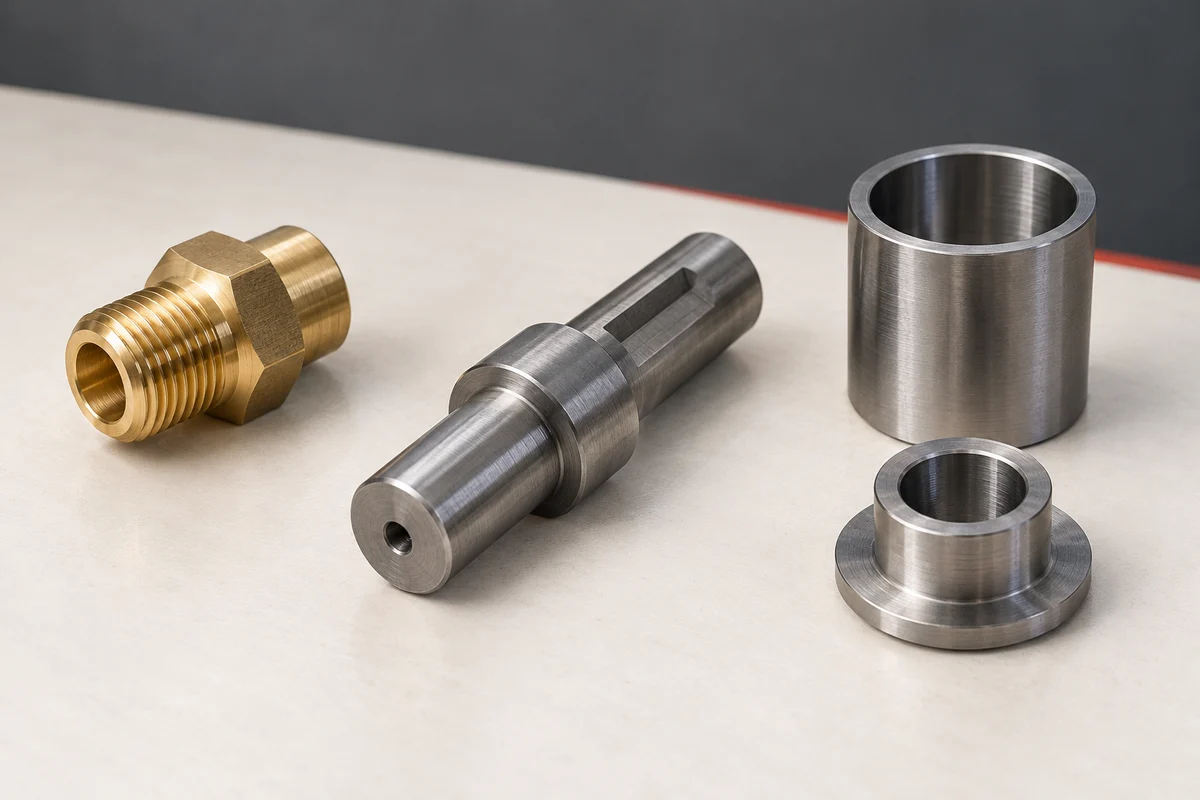
Record the drawing’s surface-texture requirement together with the geometry and datum relationship it applies to. A texture value does not by itself define flatness, face orientation, a sealing-cone angle or the relationship between a bore and its mating surface. If the drawing specifies lay, edge condition or another surface parameter, carry that requirement into the process discussion as written. Ask how the proposed inspection will evaluate each characteristic. When a symbol or requirement is unclear, resolve it with the drawing owner before accepting a machining recommendation. A photograph of a shiny part cannot answer these questions or establish sealing performance.
Map the datum before combining operations
For a straight adapter, list the bore, sealing face, external diameters and thread in their proposed machining order. Identify where the locating datum is established and which surface is used when the part is regripped. If the plan transfers the component to another machine, ask how that setup will locate and protect the previously finished features. If the plan keeps several features in one setup, review tool access, clamping clearance and the final cut-off or second-end operation. Fewer transfers may simplify handling, but the number of setups alone does not prove the required relationship between the sealing face and bore.
Keep a finishing operation until its replacement is demonstrated
Where the existing route includes grinding, lapping or another finishing operation, ask what requirement that operation satisfies. It may address a surface characteristic or geometry that the preceding turning stage was not intended to deliver. A proposal to remove it should therefore identify the replacement process and the evidence needed to approve the change. Review representative material, blank condition, tooling and measurement conditions together. Do not adopt a supplier’s example from a different material or component as proof for your adapter. If the evidence is incomplete, retain the separate operation in the quotation scope while the technical question remains open.
Put heat treatment, coatings and deburring on the route
State whether heat treatment, coating or plating occurs before or after the sealing surface is finished. If one of these steps is specified, identify the inspection stage and who is responsible for the final accepted condition. For adapters with radial ports or cross holes, also record how intersection edges will be reviewed and how the sealing surfaces will be protected during deburring. Do not add an unapproved edge break or change an interface to make manufacturing easier. A machining-only quotation should clearly identify any excluded treatment, cleaning or final inspection so the buyer can compare the complete route.
Compare the accepted part, not just the shortest route
For two competing proposals, compare the same drawing revision and material condition. Request a route that identifies turning, any secondary cutting, finishing, treatment, inspection and handling between steps. Keep proposed machine time separate from any unconfirmed finishing work and from the acceptance method. If a sample evaluation is planned, agree in advance which surfaces are measured, when they are measured and which records are supplied. A shorter sequence becomes a purchasing advantage only after its technical and commercial assumptions are understood. The Bezares announcement is a useful prompt to review process boundaries; it cannot establish the result of a GEDEMA application.
Start a GEDEMA discussion with the sealing-interface drawing
For compact repeat adapter bodies, the published GDM-T40-360D page is a starting point for a turning discussion. If the drawing also includes drilled or milled features, review the related process questions before discussing a proposed machine configuration. These references do not promise a sealing result or an integrated grinding function. Send Us Your Drawing with material, quantity, critical dimensions and the sealing-interface requirements. Include the blank form, existing finishing sequence, treatment stage and required inspection records. This allows GEDEMA to discuss the turning portion and identify the process boundaries that need confirmation before a complete quotation.